
Gorse
Alert
Be on the lookout for gorse and report any sightings immediately.
Reporting options
- Report online.
- Phone Biosecurity Queensland on 13 25 23.
- Phone the Exotic Plant Pest Hotline on 1800 084 881.

Gorse flower
© Queensland Government
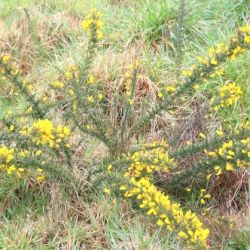
Gorse bush
© Queensland Government
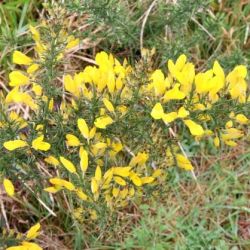
Gorse flowers
© Queensland Government
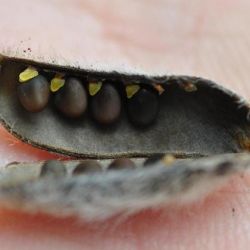
Gorse seeds
© Steven Conaway Creative Commons

Gorse stem
© Norman Rees Creative Commons
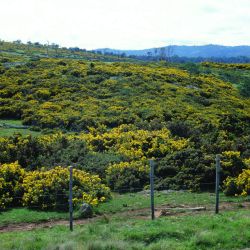
Large Gorse infestation
© Queensland Government
Native to Europe, gorse is a dense, thorny shrub that is now a major agricultural invasive plant in Tasmania and parts of Victoria. Gorse is one of Australia's worst invasive plants because of its invasiveness, potential for spread, and economic and environmental impacts. Gorse thickets increase fire risk, provide shelter for invasive species, and dramatically reduce pasture stocking rates.
Gorse is occasionally grown as a garden plant and could escape cultivation to become a serious problem in cooler parts of southern Queensland.
Scientific name
Ulex europaeus
Other names
- Common gorse, European gorse, furze, golden gorse, gorse, Irish furze, whin
Description
- Dense, thorny shrub, 2–4m tall.
- Flowers are fragrant, pea-shaped, bright yellow, 2–2.5cm long.
- Leaves are dark green, narrow, spine-like, rigid,1–3cm long and 1.5mm wide.
- Pods are egg-shaped, oblong, 10–25mm long, 6–8mm wide, turn dark brown or black as they mature.
- Seeds are green to brown, smooth and shiny, about 3mm long.
- Stems are ridged, hairy, armed with many spines to 5cm long.
Habitat
- Found in national parks and other bushland areas.
- Prefers hillsides, waterways, roadsides, railways, pastures, grasslands, open woodlands, forests, disturbed sites, coastal environs, waste areas and forest margins in temperate regions.
- Occasionally found in cooler, upland areas of subtropical regions.
Distribution
- Visit the Weeds Australia website and click on the distribution tab to access the distribution map.
Life cycle
- Flowers throughout the year, mainly July–October and March–May.
- Seeds germinate mainly in autumn and spring to mid-summer.
Plants affected
- Native plants
Animals affected
- Grazing stock
- Cattle
Impacts
Environmental
- Provides shelter for invasive animals such as rabbits.
- Increases bushfire risk due to flammability.
Economic
- Forms dense thickets and dramatically reduces stocking rates.
- Costs millions of dollars annually to manage.
How it is spread
- Seeds spread by animals, in contaminated soil (e.g. during road-making, grading and other soil-moving activities), in mud, by water, and in dumped garden waste.
Prevention
- Find out how farmers can prevent weed spread.
- Find out how gardeners and outdoor enthusiasts can prevent weed spread.
Control
Before undertaking any preventative or control actions, contact us online, by phone or in person.
Legal requirements
- Gorse is a prohibited invasive plant under the Biosecurity Act 2014. You must not:
- keep it
- move it
- give it away
- sell it
- release it into the environment.
- You must not take any action that is reasonably likely to exacerbate the biosecurity threat posed by gorse.
- You must take any action that is reasonably likely to minimise the biosecurity threat posed by gorse.
- You must report any sightings immediately using 1 of these methods:
- Report online.
- Phone Biosecurity Queensland on 13 25 23.
- Phone the Exotic Plant Pest Hotline on 1800 084 881.
If you do any of these, penalties may apply.
Further information
- Contact us online, by phone or in person.
- Read the Weeds Australia—gorse profile.