
Asparagus fern
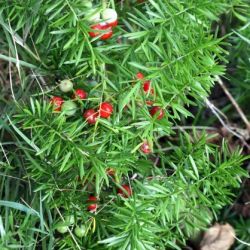
Asparagus fern
© Queensland Government
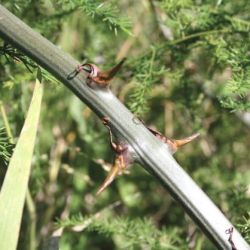
Climbing asparagus fern thorns
© Queensland Government
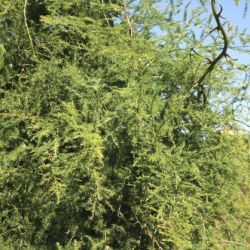
Climbing asparagus fern
© Queensland Government
Native to southern Africa, asparagus fern is a twining invasive plant that is a popular garden ornamental. However, it has escaped from gardens and spread—infestations are scattered widely around Australia.
This invasive plant is part of a group of ferns known collectively as ‘asparagus ferns’:
- asparagus fern (Asparagus scandens)
- basket asparagus fern (A. aethiopicus)
- bridal veil (A. declinatus)
- climbing asparagus fern (A. africanus)
- feathered asparagus fern (A. plumosus).
All these asparagus ferns are category 3 restricted matter in Queensland. Due to these plants’ invasive properties and the difficulty of removing them from bushland, gardeners should avoid planting all types of asparagus ferns.
Scientific name
Asparagus scandens
Other names
- Snake feather
Similar species
Description
- Fern with long, flat branching thornless stems, twining up to 3m.
- Leaves are lance-shaped, flat with distinct midrib, dark green, 5–15mm long, in groups of 3.
- Flowers are small, white or pinkish white, solitary or in 2–3 per axil on short stalks.
- Fleshy, globular fruits up to 5–7mm in diameter.
- Fruits ripen from green to orange-red, containing 1 black seed.
- Roots are fibrous with short rhizomes, often with narrow tubers, stems arise from a small central crown.
Habitat
- Subtropical to temperate high-rainfall regions.
- Invades shaded woodland, heathland, sclerophyll forest, cool rainforest, riparian and coastal habitats and disturbed areas.
Distribution
- Visit Weeds Australia and click on the distribution tab to access the distribution map.
Life cycle
- Usually flowers May–October.
- Fruit appears from September and can remain until next flowering.
- Germinates September–February.
Impacts
Environmental
- Becomes dominant ground cover, displacing native plants, even in undisturbed systems.
How it is spread
- Spread by fruit-eating birds, foxes, rabbits.
Prevention
- Find out how farmers can prevent weed spread.
- Find out how gardeners and outdoor enthusiasts can prevent weed spread.
Control
Physical control
- Remove berries, seeds and entire crown of underground stem with sharp knife to prevent regrowth.
- Follow up to control seedling germination and regrowth from missed tubers.
Herbicide control
- Herbicide control is effective.
- Use spot spray and cut-stump methods.
Read the asparagus fern fact sheet for herbicide control and application rates.
Biological control
- No known biological control agent.
Legal requirements
- Asparagus fern is a category 3 restricted invasive plant under the Biosecurity Act 2014.
You must not:- give it away
- sell it
- release it into the environment.
- You must take all reasonable and practical measures that are under your control to minimise the biosecurity risks associated with dealing with asparagus fern. This is part of your general biosecurity obligation.
- Each local government must have a biosecurity plan that covers invasive plants in its area. This plan may include actions to be taken on asparagus fern. Some of these actions may be required under local laws. Contact local government for more information.
If you do any of these, penalties may apply.
Further information
- Contact us online , by phone or in person.
- Read the asparagus fern fact sheet