
Citrus red mite
Alert
Be on the lookout for citrus red mite and report any sightings immediately.
Reporting options
- Report online.
- Phone Biosecurity Queensland on 13 25 23.
- Phone the Exotic Plant Pest Hotline on 1800 084 881.
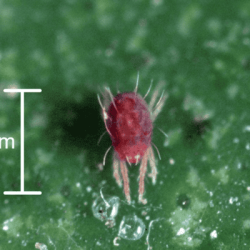
Adult citrus red mite showing its white hairs
© Jack Kelly Clark, courtesy of the University of California Statewide IPM Program
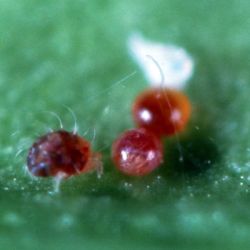
Nymph (left) and eggs of citrus red mite
© Jack Kelly Clark, courtesy of the University of California Statewide IPM Program
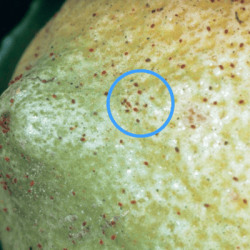
Citrus red mite feeding on lemon rind
© Jack Kelly Clark, courtesy of the University of California Statewide IPM Program
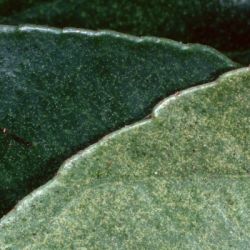
Leaf stippling caused by citrus red mite
© Jack Kelly Clark, courtesy of the University of California Statewide IPM Program
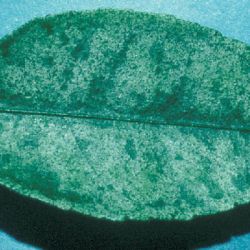
Damage caused by citrus red mite, giving the leaf a silvery appearance
© Futch, SH, Childers, CC & McCoy, CW (2020), Guide to citrus mite identification: HS-806, UF/IFAS Extension, CC 4.0
Citrus red mite feeds primarily on citrus plants. Severe infestations can lead to sudden drying of plant tissues and leaf defoliation from healthy stems. Fruit becomes blemished, reducing its marketability, and yield decreases.
This pest has a very high reproductive rate, so early detection and reporting are important for its control. It is not present in Queensland.
Scientific name
Panonychus citri
Other names
- Citrus red spider mite
- Purple mite
- Red spider mite
Description
Adults
- Adults are deep red to purple with white hairs on the top of their body surface.
- Females are oval-shaped and about 0.5mm long. Males are smaller, lighter in colour and narrower towards the back of the body.
Nymphs
- There are 2 nymphal stages, each with 4 pairs of legs.
Larvae
- There is 1 larval stage, with 3 pairs of legs.
- Larvae are smaller than adults and typically paler in colour.
Eggs
- Eggs are red to reddish orange.
- They are about 0.15mm in diameter and almost spherical, with a flattened portion at the bottom.
- Each egg has an upward vertical stalk with webbing connecting the stalk to the leaf surface.
Plant stage and plant parts affected
- Citrus red mite feeds on leaves, fruit and green twigs across all life stages of host plants.
Plant damage and symptoms
- Citrus red mite uses piercing and sucking mouthparts to feed, destroying plant cells.
- Severe infestations can lead to ‘firing’ symptoms such as sudden leaf drying and leaf detachment from stems that appear to be healthy.
- Under high infestation pressure, stippling can merge together, creating a silvery appearance on the upper leaf surface.
- Infestation can cause fruit drop and reduced marketability (because of yellow markings on fruit surfaces).
May be confused with
Citrus red mite can be easily confused with other spider mite species that are orange to red in colour, including oriental red mite and sometimes two-spotted mite (which can be red in appearance). However, many spider mites have white, opaque or translucent spherical eggs, while citrus red mite eggs are reddish orange.
Some red-coloured mites are beneficial, so it’s important to check for plant damage before using control measures.
Distribution
Citrus red mite occurs worldwide but mainly in coastal citrus-growing regions. In Australia, it is currently restricted to the Central Coast of New South Wales.
Hosts
Overall, citrus red mite has been reported on more than 110 species of host plants:
- Primary hosts include citrus species such as lemon, grapefruit, orange and tangerine.
- Secondary hosts include almonds, pears, grapes and ornamental plants.
Life cycle
- A female can lay up to 37 eggs over a 2-week period.
- Development times depend on the temperature and host plant.
- Eggs hatch in 7–9 days.
- Feeding starts in the first nymphal stage.
- Egg-to-adult development can take as little as 12 days in warm weather.
- Mites cannot develop in temperatures under 10°C or above 40°C.
- Mite numbers can increase very quickly, up to 8.5 times the original population in 10 days under optimal conditions (30 to 60% relative humidity and dry weather). However, very dry conditions of less than 25% relative humidity can cause lethal dehydration.
Plants affected
- Citrus, almonds, pears, grapes and ornamentals
Impacts
If this pest became established in Queensland, it would most likely have a high economic impact. This is because it can reproduce rapidly, and it would reduce both yield (due to fruit drop) and marketability (due to fruit damage). Up to 41% yield reduction has been reported on Tahitian lime due to citrus red mite infestation.
How it is spread
The mites can spread by wind—they can float on air streams (‘ballooning’) by holding onto silk threads. Ballooning distances have not been reported for citrus red mite, but other mite species can balloon hundreds of metres and up to a kilometre in highly favourable conditions.
Mechanical spread is possible, through human movement of plants, plant material and equipment during crop maintenance and harvesting.
Monitoring and action
Visually inspect host plant leaves and fruit for feeding-spot marks (stippling) and/or a silvery/bleached appearance on the upper leaf surface.
If you suspect citrus red mite, report it immediately using 1 of these methods:
- Report online.
- Phone Biosecurity Queensland on 13 25 23.
- Phone the Exotic Plant Pest Hotline on 1800 084 881.
Prevention
Protect your farm from plant pests and diseases:
Legal requirements
There are no specific legal requirements for citrus red mite.
Further information
For specific advice on monitoring for exotic citrus pests and diseases, refer to: