
Banana skipper
Alert
Be on the lookout for banana skipper and report any sightings within 24 hours.
Reporting options
- Report online.
- Phone Biosecurity Queensland on 13 25 23.
- Phone the Exotic Plant Pest Hotline on 1800 084 881.
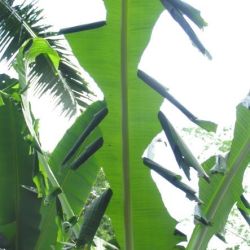
Damage to banana plant by caterpillar of the banana skipper
Queensland Government
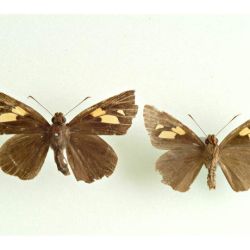
Banana skipper
Walker, K. (2005) PaDIL
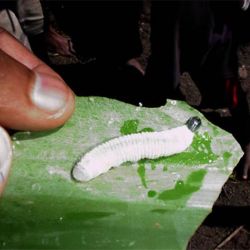
Banana skipper larva
Walker, K. (2005) PaDIL
Banana skipper (Erionota thrax) is a high-priority pest of bananas. It poses a significant threat to Australia's banana industry.
Banana skipper caterpillars damage banana plants by shredding leaves and making numerous rolls of the leaf blade, up to 15cm long, to feed safely inside them. Damage of up to 60% of the leaf area of banana plants has been recorded during outbreaks.
Banana skipper larvae were collected on Saibai Island in the Torres Strait on 11 May 2021 during routine surveillance activities. Biosecurity Queensland is responding to this detection.
Banana skipper is a category 4 Emergency Plant Pest under Schedule 13 of the Emergency Plant Pest Response Deed and is listed as prohibited matter in the Biosecurity Act 2014.
Scientific name
Erionota thrax
Other names
- Banana skipper butterfly
- Banana leafroller
Description
Adult butterfly
- Brown with 3 yellow-white areas at the front of the wings.
- Wingspan approximately 7cm.
- Most active in the early evening.
- Move in fast, darting, skipping motion.
- Attracted to light.
Larvae
- Shred banana leaves and cause leaf rolling.
- Shiny black heads, narrow necks and pale green bodies.
- Covered in white waxy powder.
- Grow to 6cm.
Pupae
- Found inside the leaf roll.
- Covered in white waxy powder.
Eggs
- Small, yellow.
- Laid singly or in batches of up to 25 on the underside of banana leaves.
Plant damage
- Rolled up leaves extending to 15cm.
- Fine white powdery substance in rolled-up leaves.
Distribution
Widespread in South-East Asia; also found in Papua New Guinea, Mauritius, Guam and Hawaii.
Banana skipper has not previously been recorded in Australia. However, Biosecurity Queensland is responding to a detection of the pest on Saibai Island, which is part of Queensland located just 4km south of Papua New Guinea. Saibai Island is over 700km from the nearest Australian commercial banana production area.
Hosts
- Banana.
- Musa species, including Manila hemp (Musa textalis).
Life cycle
Several generations may be produced during a year. Eggs are laid singly or in groups of up to 25 on the underside of banana leaves and hatch after 5–8 days.
There are 5 larval stages over 30 days. Later larval stages are covered in a white waxy powder. Larvae spin strong threads, shred leaves and roll them into a shelter to hide and feed.
Pupation occurs inside the leaf roll and takes 8–12 days.
Plants affected
- Banana
- Musa species, including Manila hemp (Musa textalis)
Impacts
Damage of up to 60% of the leaf area of banana plants has been recorded during outbreaks. If the outbreak comes at the time of fruiting, yields are lower due to delayed fruit maturity and reduced bunch size.
Heavy infestations can lead to complete defoliation of banana plants.
How it is spread
The greatest risk of pest spread is through moving infested plant material with eggs attached to leaves.
Adult moths may also hitchhike in vehicles, machinery or aircraft.
Strong winds may assist adult moths to travel outside localised areas.
Monitoring and action
Inspect your plants regularly for the presence of new pests and unusual symptoms.
Look for rolled-up sections of leaves. Unroll the leaf curls and check for the presence of the caterpillars and/or their white powdery covering.
The adult butterflies are most active in the early evening and are not commonly seen.
If you suspect banana skipper, report it within 24 hours using 1 of these methods:
- Report online.
- Phone Biosecurity Queensland on 13 25 23.
- Phone the Exotic Plant Pest Hotline on 1800 084 881.
Further information
- Read the Plant Health Australia banana skipper butterfly fact sheet (PDF, 642KB).