
Spiked pepper
Alert
Be on the lookout for spiked pepper and report any sightings immediately.
Reporting options
- Report online.
- Phone Biosecurity Queensland on 13 25 23.
- Phone the Exotic Plant Pest Hotline on 1800 084 881.

Spiked pepper leaves
© F & K Starr Creative Commons
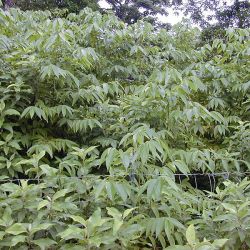
Spiked pepper infestation
© F & K Starr Creative Commons

Spiked pepper bush
© F & K Starr Creative Commons

Spiked pepper in undergrowth
© Queensland Government

Spiked pepper large infestation
© F & K Starr Creative Commons

Spiked pepper leaves close-up
© Queensland Government
Native to South America and Central America, spiked pepper is a fast-growing tropical shrub or small tree that has become a serious problem in Papua New Guinea and other Pacific and South-East Asian countries. It is poisonous to cattle and can exclude native plants.
Scientific name
Piper aduncum
Other names
- Spiked piper, bamboo piper
Description
- This shrub or small tree grows up to 8m tall. It can be 10cm or more in stem diameter.
- Alternate leaves have short petioles and elliptical to lanceolate blades 12–20cm long.
- Spikes contain minute flowers that develop into imbedded drupes (fruits) with brown or black seeds.
- The plant has a peppery taste and odour.
Habitat
- Prefers rainforests, roadsides, waterways, plantations and pasture.
Distribution
- Not known to exist in Queensland but has potential to become a serious problem if introduced and planted.
Life cycle
- Flowers and fruits throughout the year.
Plants affected
- Native vegetation
Animals affected
- Cattle
Impacts
Environmental
- Forms infestations that exclude all native vegetation.
Economic
- Poisonous to cattle.
Prevention
- Find out how farmers can prevent weed spread.
- Find out how gardeners and outdoor enthusiasts can prevent weed spread.
Control
- Before undertaking any preventative or control actions, contact us online, by phone or in person.
Legal requirements
- Spiked pepper is a prohibited invasive plant under the Biosecurity Act 2014. You must not:
- keep it
- move it
- give it away
- sell it
- release it into the environment.
If you do any of these, penalties may apply.
- You must not take any action that is reasonably likely to exacerbate the biosecurity threat posed by spiked pepper.
- You must take any action that is reasonably likely to minimise the biosecurity threat posed by spiked pepper.
- You must report any sightings immediately using 1 of these methods:
- Report online.
- Phone Biosecurity Queensland on 13 25 23.
- Phone the Exotic Plant Pest Hotline on 1800 084 881.
Further information
- Contact us online, by phone or in person.
- Read the spiked pepper fact sheet.