
Eurasian water milfoil
Alert
Be on the lookout for Eurasian water milfoil and report any sightings immediately.
Reporting options
- Report online.
- Phone Biosecurity Queensland on 13 25 23.
- Phone the Exotic Plant Pest Hotline on 1800 084 881.

Eurasian water milfoil stem
© David Bygott Creative Commons

Eurasian water milfoil submerged
© R Desbarats Creative Commons

Eurasian water milfoil submerged
© US Fish & Wildlife Service Creative Commons
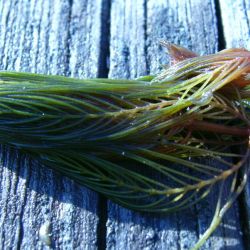
Eurasian water milfoil out of water
© R Desbarats Creative Commons
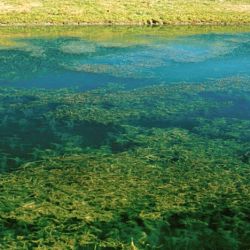
Eurasian water milfoil infestation
© Robert L Johnson Creative Commons
Native to Eurasia and northern Africa, Eurasian water milfoil is a submerged invasive aquatic plant that can grow quickly and invade waterways. It has not been found in Queensland so far but could become a major pest here if introduced. It is a prohibited invasive plant under the Biosecurity Act 2014.
Scientific name
Myriophyllum spicatum
Similar species
- Native Myriophyllum ssp., Ceratophyllum demersum
Description
- It is a submersed aquatic plant.
- Emergent flower heads are orange to red.
- Leaves are dissected, 'feathery', in whorls of 4, and contain 12–21 leaflets.
- Long stems form surface-reaching mats.
- Plants form turions (dormant, detached buds) for overwintering.
- Rhizomes root to 10m depth, can grow 3–5m to surface.
3D model
- View the 3D model to help you identify this plant. You can magnify the image and manipulate the view to inspect the plant from every angle.
Habitat
- Prefers slow-flowing and standing water bodies.
- Can grow in fresh and saline water.
- Grows well in nutrient-rich water.
Distribution
- Not known to occur in Queensland.
Life cycle
- Begins growth in spring with increasing water temperature. Achieves maximum growth in water temperatures above 18°C.
- Flowers in summer once stems reach water surface. Is pollinated by wind and insects.
- Plants fragment after flowering and die back to rhizomes towards winter. Rhizomes resprout in spring.
Plants affected
- Native water plants
Impacts
Environmental
- Grows quickly in calm water bodies such as reservoirs and dams, eventually blocking waterways.
- Displaces native aquatic plants and reduces biodiversity.
- Can affect water quality when infestations are dense.
- Creates favourable mosquito habitat.
Social
- Impedes recreational activities such as waterskiing and fishing.
- Interferes with infrastructure such as irrigation.
- Poses danger for swimmers, who can become entangled.
How it is spread
- The plant propagates through seeds and stem fragments.
- Seeds can be spread by waterbirds.
- Fragments are spread by water currents and humans—this is the main way the plant spreads.
Prevention
- Find out how farmers can prevent weed spread.
- Find out how gardeners and outdoor enthusiasts can prevent weed spread.
Control
- Before undertaking any preventative or control actions, contact us online, by phone or in person.
Herbicide control
- Controlled with herbicides overseas (2,4D, Diquat, endothall, copper, fluridone).
Biological control
- No known biological control agents.
Legal requirements
- Eurasian water milfoil is a prohibited invasive plant under the Biosecurity Act 2014.
- You must not:
- keep it
- move it
- give it away
- sell it
- release it into the environment.
- You must not take any action that is reasonably likely to exacerbate the biosecurity threat posed by Eurasian water milfoil.
- You must take any action that is reasonably likely to minimise the biosecurity threat posed by Eurasian water milfoil.
- You must report any sightings immediately using 1 of these methods:
- Report online.
- Phone Biosecurity Queensland on 13 25 23.
- Phone the Exotic Plant Pest Hotline on 1800 084 881.
If you do any of these, penalties may apply.
Further information
- Contact us online, by phone or in person.
- View the Eurasian water milfoil 3D model.