
Horsetails
Alert
Be on the lookout for horsetails and report any sightings immediately.
Reporting options
- Report online.
- Phone Biosecurity Queensland on 13 25 23.
- Phone the Exotic Plant Pest Hotline on 1800 084 881.
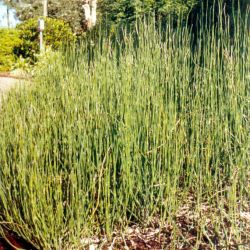
Horsetails infestation
© Queensland Government
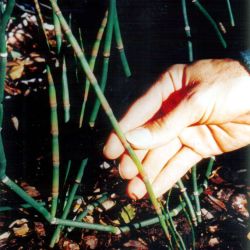
Horsetails plant close-up of stem
© Queensland Government
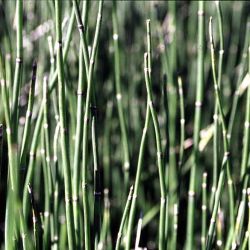
Horsetails segmented stems
© Queensland Government
Native to much of the world, including temperate parts of Europe, North America and Asia, the horsetail group includes about 30 different species in the genus Equisetum. Horsetails are serious invasive plants in many places, and Australia is one of the few countries that is still free of major infestations.
While there are no known wild populations of horsetails in Queensland, they are occasionally grown as garden plants and herbs. Horsetails have the potential to escape cultivation and become a serious problem.
Scientific name
Equisetum spp.
Other names
- Candock, scouring-rush
Description
- These primitive, non-woody herbaceous plants grow 5–120cm tall (scouring rush horsetail up to 120cm, common horsetail up to 80cm).
- Many horsetails have the appearance of miniature bamboo.
- Leaves are greatly reduced and non-photosynthetic. They grow in whorls of 6–18 on the main shoots and are fused part of their length into nodal sheaths.
- Plants do not flower.
- Stems are green, photosynthetic, hollow, jointed and ridged (sometimes 3 but usually 6–40 ridges).
- Fruiting cones 1–4cm long grow at the ends of stems and produce pale-greenish to yellow spores.
Habitat
- Generally found in moist habitats such as edges of lakes, rivers and creeks, ditches, seepage areas, meadows, pastures, marshes, and wet woodlands.
- Prefer disturbed areas.
Distribution
- In Queensland, recorded only as garden plants to date.
Life cycle
- Grow from early spring until autumn.
- Reproduce from spores.
Plants affected
- Native plants
- Native water plants
- Crops
Impacts
Environmental
- Form pure stands over extensive areas, mainly in wetlands and low-lying crops.
How it is spread
- Spread mostly by vegetative means.
Prevention
- Find out how farmers can prevent weed spread.
- Find out how gardeners and outdoor enthusiasts can prevent weed spread.
Control
- Before undertaking any preventative or control actions, contact us online, by phone or in person.
Legal requirements
- Horsetails is a prohibited invasive plant under the Biosecurity Act 2014. You must not:
- keep it
- move it
- give it away
- sell it
- release it into the environment.
- You must not take any action that is reasonably likely to exacerbate the biosecurity threat posed by horsetails.
- You must take any action that is reasonably likely to minimise the biosecurity threat posed by horsetails.
- You must report any sightings immediately using 1 of these methods:
- Report online.
- Phone Biosecurity Queensland on 13 25 23.
- Phone the Exotic Plant Pest Hotline on 1800 084 881.
If you do any of these, penalties may apply.
Further information
- Contact us online, by phone or in person.
- Read the horsetails fact sheet.