
Locusts
Alert
Report significant locust or nymph activity to help us:
- monitor locust density and movement across Queensland
- reduce the likelihood of locust swarms.
Reporting options
- Report online or offline (via Survey123).
- Report online (via Report a biosecurity pest or disease).
- Phone Biosecurity Queensland on 13 25 23.
- Email locustreports@dpi.qld.gov.au.
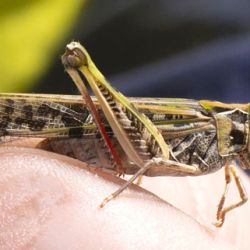
Australian plague locust
© Queensland Government
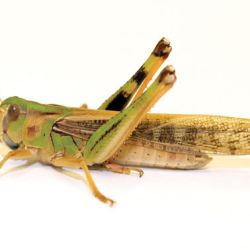
Migratory locust
© Queensland Government
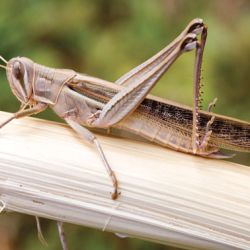
Spur-throated locust
© Queensland Government
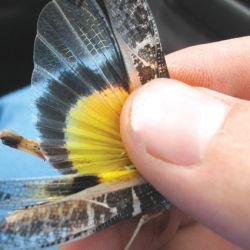
Yellow-winged locust
© Queensland Government
In Queensland, 4 locust species are of economic importance:
- Australian plague locust (Chortoicetes terminifera)
- migratory locust (Locusta migratoria)
- spur-throated locust (Austracris guttulosa)
- yellow-winged locust (Gastrimargus musicus).
All locust species are not a prohibited or restricted species under the Biosecurity Act 2014.
Although they look similar, grasshoppers may often be confused with locusts. The main difference is the fact that they behave differently. Australian locusts often form into groups when nymph populations are dense, resulting in large-scale migrations from breeding areas. Grasshoppers generally remain solitary and localised. Learn more about grasshoppers.
Description
- Main difference between locusts and grasshoppers is that locusts swarm and grasshoppers do not.
- See each locust species entry for detailed descriptions.
May be confused with
- Wingless grasshopper (Phaulacridium vittatum)
- Eastern plague locust (Oedaleus australis)
Distribution and habitat
- Requires green vegetation for successful breeding.
- Read the locusts fact sheet for distribution for each species.
Damage
- Damages crops and pastures. A high-density swarm can contain around a billion insects, which can eat 20 tonnes of vegetation per day. Locusts at both the hopper and adult stages can cause extensive crop and pasture damage. In Queensland, all crops can potentially be attacked, but summer crops are most at risk.
- Invades previously uninfested areas, laying eggs and making swarm control difficult.
Life cycle
- All locusts have 3 stages of life: egg, nymph (sometimes referred to as 'hopper'), and adult.
- Read the locusts fact sheet for distribution for each species.
Monitoring and thresholds
- Programs to treat adult flying locusts are generally ineffective.
- The optimum time for control of locusts is at the nymph stage.
Natural enemies
- Insectivorous birds and mammals, predator insects, parasitoids and diseases.
Control
- All landholders are responsible for locust management as part of their general biosecurity obligation under the Biosecurity Act 2014.
- Locusts in pasture and some crops are readily controlled with insecticides if treated at the right time. Only chemicals registered or approved for use by the Australian Pesticides and Veterinary Medicines Authority are recommended.
- Preventative control while locusts are still in the nymph stage (unable to fly) or before adults lay eggs is the most economically effective measure to reduce the risk of locust swarms developing.
- Control options for locusts in sugarcane are currently limited, as no registered products are available for use. Learn more about locust outbreaks in Queensland sugarcane regions.
Coordination
- The Department of Primary Industries (DPI) is responsible for coordinating control if populations are beyond the capacity for landholder control and threaten key agricultural regions of Queensland.
- The Australian Plague Locust Commission may also implement control measures when it believes locust numbers are high enough to present an interstate threat.
Report
Report significant locust or nymph activity to help us monitor locust density and movement across Queensland and reduce the likelihood of locust swarms.
Reporting options
- Report online or offline (via Survey123).
- Report online (via Report a biosecurity pest or disease).
- Phone Biosecurity Queensland on 13 25 23.
- Email locustreports@dpi.qld.gov.au.
Further information
- Read the guide to managing locusts in Queensland.
- Find out how to identify locust species.
- Read the locusts fact sheet.
- Find out about the standardised process for locust response in Queensland.
- Learn about managing locust outbreaks in Queensland sugarcane regions.
- Find out about the role of the Australian Plague Locust Commission.
- Contact us online, by phone or in person.