
Japanese seaweed
Alert
Be on the lookout for Japanese seaweed and report any sightings immediately.
Reporting options
- Report online.
- Phone Biosecurity Queensland on 13 25 23.
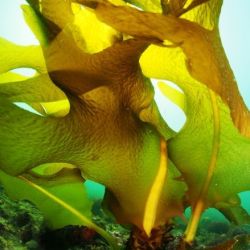
Japanese seaweed
© John Lewis
Japanese seaweed is an invasive and prohibited marine pest not found in Queensland waters. It can be introduced via ship's ballast water, as biofouling on boat hulls and through internal seawater systems.
It has smooth, thin golden-brown blades and can grow up to 1m long (rarely to 3m). Japanese seaweed grows rapidly on any available space and can form dense beds on sheltered reefs.
Scientific name
Undaria pinnatifida
Other names
- Wakame
Description
- Conspicuous midrib along length of blade.
- Spore-bearing ruffle near base of mature plant.
- Claw-like attachment holdfast.
- Mature plants present only from early winter to midsummer.
Habitat
- Temperate coastal waters.
- Lower intertidal to 20m depth.
- Attaches to rocks, reefs and stones.
Distribution
- Wakame has been found in Tasmania and in Victoria. It is not known to exist in Queensland.
Animals affected
- Native aquatic animals and habitats
Impacts
Environmental
- Can form dense forests at depths of up to 15m and can quickly displace native habitats.
Economic
- Fouls vessels, artificial structures and aquaculture equipment.
Social
- Can negatively affect the visual amenity and our way of life. Marine pests can:
- lead to depleted fish stocks
- lead to boating and fishing restrictions in affected areas
- impact significantly on the marine industry that many people rely on for employment and recreational purposes.
Control
Look. Report. Protect
Marine biosecurity – everyone plays a part.
- Clean your boat regularly.
- Check for marine pests on structures and surrounds.
- Report any suspected marine pests.
Slipway operators, vessel inspectors and vessel owners should regularly and thoroughly check and clean vessel hulls looking out for pests or growth. Pay particular attention to the nooks and crannies of your vessel including internal seawater systems.
Inspect, clean and dry equipment and gear before moving to a different location. This includes pots, nets, fishing or diving gear, anchors and ropes.
Legal requirements
- Japanese seaweed is a prohibited invasive marine plant under the Biosecurity Act 2014. You must not:
- keep it
- move it
- give it away
- sell it
- release it into the environment.
If you do any of these, penalties may apply.
- You must not take any action that is reasonably likely to exacerbate the biosecurity threat posed by Japanese seaweed.
- You must take any action that is reasonably likely to minimise the biosecurity threat posed by Japanese seaweed.
- You must report any sightings immediately using 1 of these methods:
- Report online.
- Phone Biosecurity Queensland on 13 25 23.
Further information
- Contact us online, by phone or in person.