
Step 3 – Identify workforce risks and gaps and develop solutions
Once you know what your workforce looks like now and what it should look like in the future, you can develop strategies and actions to address any gaps. It brings together the analysis, insights and directions revealed in the previous steps – getting started with workforce planning and gathering information.
During this stage of the process, you can develop a workforce strategy to address issues that are common across the whole business, or unique to a specific part of the business.
Assess your workforce gaps
A workforce gap occurs when there is a mismatch between supply and demand. That can mean that you either:
- do not have enough employees to meet your business needs
- have too many employees for your business needs.
If you understand your potential workforce gap, you can plan to address it through relevant strategies and actions. Once you’ve gathered your workforce supply and demand data, you can compare this information to see a picture of the workforce gaps in your business. This process is called a gap analysis.
A gap analysis could include asking the following questions:
- Do you have trouble recruiting or keeping people with the right skills to meet your business goals?
- Are you expecting anyone to retire or leave in the timeframe you’re considering?
- Are there people in your business whose skills you’re not using effectively?
- Do you have too many people, or not enough people, to meet your business goals?
If you answered yes to any of these questions, you may have identified workforce gaps and risks related to:
- workforce numbers and roles
- skills gaps
- the demographic profile of your workforce.
Resource
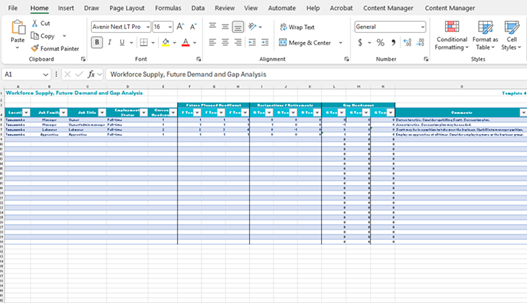
Use the template for workforce supply, future demand gap analysis (template 4) to identify your skills gap.
Determine your workforce risk and prioritise gaps
A workforce risk can be any workforce-related issue that can disrupt your business’ ability to deliver its outcomes or meet its goals. Not having the right skills can sometimes be just as much of a risk as not having the right number of people.
Risk assessment looks at the gaps in workforce supply and demand as well as internal and external business risks and considers:
- the likelihood of not being able to fill the workforce or skills gaps
- the consequence of not being able to fill the workforce or skills gaps
- whether the risk is low, medium, high or severe.
Internal workforce risks may include issues related to:
- leadership
- resignations
- workforce skills and capabilities
- workplace health and safety.
External workforce risk may include issues related to:
- market competition
- new technology
- environmental factors
- consumer behaviour.
Resources
Use the risk assessment worksheet (template 5) to identify and assess your risks and possible solutions.
You can also find guidance in the:
- Workforce Planning Connect toolkit for small- to medium-sized businesses
- Workforce Planning Connect workbook for micro businesses and small enterprises. This workbook has also been translated
Develop workforce strategies and actions
Workforce planning strategies and actions may include:
- developing your existing workforce skills and capability
- attracting new employees to address skill gaps
- retaining valued employees
- managing the workforce through business change.
These categories cover a range of activities to help ensure your workforce matches business requirements into the future. You can adjust the strategies and solutions you develop in response to workforce and external trends. You could, for example, consider options like:
- recruiting
- on-the-job training
- promoting workers
- increasing working hours.
Identify issues and find solutions checklist
- I have identified my workforce gaps and understand the workforce risks.
- I have developed potential solutions for the workforce gaps.
- I prioritised what I need to do to ensure my workforce will be ready to support my business goals.