
About the Logan Basin water plan area
The Water Plan (Logan Basin) 2007 (the water plan) supports water management for urban centres such as Logan, Beenleigh, Beaudesert, and the Redlands, as well as smaller rural settlements like Boonah, Kooralbyn, Canungra, and parts of Tamborine Mountain.
The water plan ensures that water development is ecologically sustainable, protecting important environmental processes, ecological needs (for plants and animals), and cultural heritage values in the region. Water in the Logan Basin is used for a variety of purposes, including urban supply, irrigated agriculture, tourism, and cultural activities.
The Logan Basin water plan area spans approximately 4,200km2 and includes major catchments such as the Logan River, Albert River, Burnett Creek, Christmas Creek and Running Creek. Water is supplied through the Logan River Water Supply Scheme, which includes key storages like Wyaralong Dam and Maroon Dam, owned and operated by Seqwater.
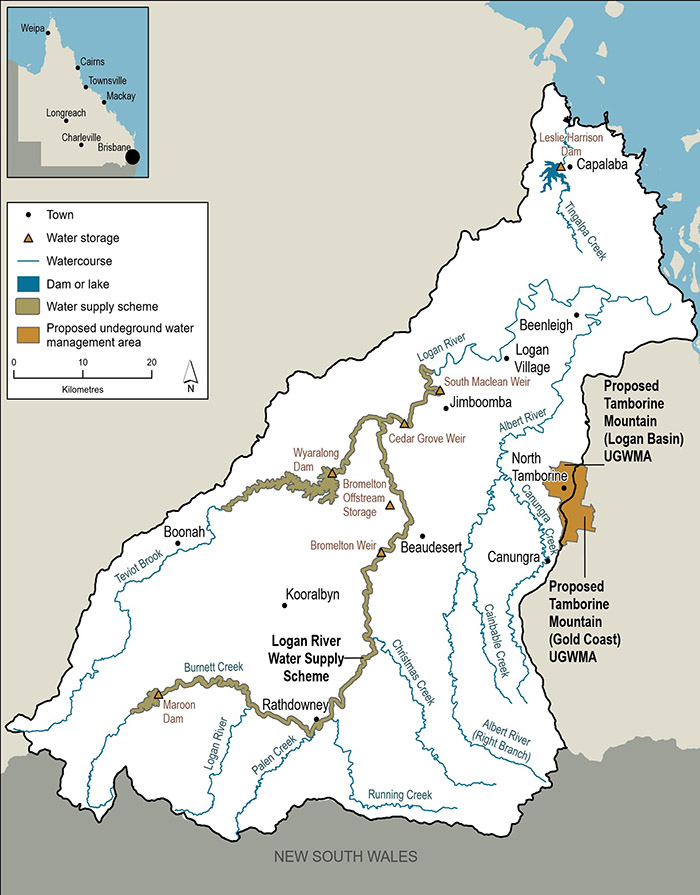
Map of the Logan Basin water plan area
Explore the water plan area (e.g. water plan boundaries, major watercourse, scheme trading zones) and its surrounding areas via the Queensland Globe water plan map (use Google Chrome for best results).
The Logan Basin water plan area is bordered by the Moreton catchment to the north and west, the Gold Coast catchment to the south-east, and the Queensland coastline.
Growing water needs in the water plan area
In developing the draft Logan Basin water plan (PDF, 1.3MB), it was important to review how water is shared across all interests, including the environment, and existing and future users.
We needed to balance the growing demand for water, while considering the impacts on existing users and the cultural, ecological and social values of communities in the plan area.
The draft water plan was developed considering technical assessments and stakeholder feedback on the:
- needs of existing water entitlement holders
- demand patterns and hydrological characteristics
- socio-economic conditions
- cultural significance and values
- the environment, including groundwater-dependent ecosystems
- existing and emerging industries.