
Buffalo fly
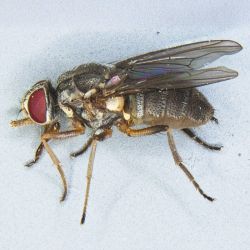
Close-up of an adult buffalo fly.
© Queensland Government
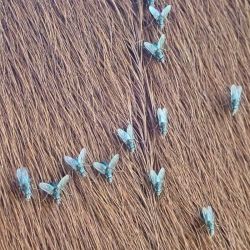
Adult buffalo flies sitting on cattle.
© Queensland Government
Scientific name
Haematobia irritans exigua
Cause
Adult flies cause buffalo fly infestations when they repeatedly feed on cattle. They can feed up to 20 times per day.
They can transmit Stephanofilaria (small nematode worms). This worm can cause buffalo fly lesions and there are no registered treatments for it in Australia.
Similar species
- House flies
- Stable flies
Distribution
Buffalo flies occur throughout Australia, with numbers highest in the wet tropics of Queensland. They prefer warm, wet environments and are more common in high-rainfall coastal areas.
Buffalo flies are moving further south, and climate warming will likely continue this trend.
Hosts
- Cattle
- Buffalo
Life cycle
- Adult buffalo flies live for 2 to 3 weeks and rely on a suitable cattle host to survive.
- Female flies lay eggs in or under fresh dung pats.
- Eggs usually hatch within 24 hours.
- Larvae develop fully within 4 to 5 days.
Animals affected
- Cattle
- Buffalo
- Horses
Clinical signs
You may observe:
- fly worry (tail flicking, head tossing, bunching, rubbing)
- reduced grazing and minimal weight gain
- skin lesions (often near the eyes and on the neck, dewlap, belly, shoulders and flanks)
- pinkeye (particularly when fly pressure is high).
Impacts
Economic and production
Buffalo flies cause blood loss and disrupt grazing, which can reduce weight gain, milk production and calf growth.
Typically:
- 200 flies per beef animal (across a 100-day fly season) can reduce weight gain by about 15kg per animal
- 30 flies per dairy animal can reduce milk yield by more than 0.5 litres per day.
Fly worry can also interfere with mating and make mustering and cattle handling more difficult.
Animal welfare
Effective buffalo fly control greatly reduces the chances of pinkeye and lesions.
Pinkeye
Pinkeye causes pain and may lead to:
- corneal ulceration
- blindness
- weight loss
- handling risks.
Lesions
In northern regions, up to 95% of cattle develop buffalo fly lesions.
They worsen year-on-year once they start, and can:
- reduce hide value and market suitability (including live export)
- attract screwworm flies (a notifiable pest in Queensland).
How it is spread
Cattle movements spread buffalo flies more commonly than natural fly dispersal, though adult flies travel up to 10km to find a host.
Always inspect new cattle for buffalo flies and treat them before introducing them to the rest of the herd.
Risk period
The main fly season runs from November to April. Fly pressure reaches its highest when conditions are warm and wet, and dung stays moist.
Lower numbers occur throughout the rest of the year.
Monitoring and action
Use fly counts and animal welfare indicators to determine when action is needed.
Industry guidance thresholds:
- Beef cattle—200 flies per animal
- Dairy cattle—30 flies per animal
Count flies consistently so you can act at the right time and identify any trends.
Control
Use an integrated approach to improve control and slow resistance over time by combining multiple control methods:
- Chemical treatments (insecticides)
- Non-chemical methods (traps, manure management, natural predators)
- Cultural practices (breeding for resistance, herd management)
Schedule all treatments to match fly pressure and seasonal patterns.
Use insecticides strategically
Buffalo flies have a short life cycle, so they develop insecticide resistance quickly.
To reduce resistance:
- rotate chemical groups where practical
- dose correctly every time
- follow label directions (including when to remove or stop using a product)
- keep treatment records.
Identify chemical groups by checking your product's active ingredient. Use the ParaBoss Product Search tool to help.
Consider using the same chemical group for other external parasites (ticks, lice, and mites) as well.
Use chemicals safely by following label directions and safety warnings. Check the Australian Pesticides and Veterinary Medicines Authority (APVMA) before you buy or use a product.
Reduce fly breeding
Buffalo flies breed in fresh, undisturbed dung. Non-chemical methods reduce breeding, protect beneficial insects in dung, and reduce reliance on repeat chemical treatments.
Build a tunnel trap
Buffalo fly tunnel traps reduce adult fly numbers when cattle pass through them regularly (for example, on the way to water, feed or the dairy).
They are easy to build and are a chemical-free way to reduce adult fly populations.
Breed for resistance
Some cattle consistently carry more flies or develop more severe lesions. Use fly counts and lesion scores to identify these animals.
Further information
- Follow our step-by-step guide to build a buffalo fly tunnel trap.
- Understand the importance of preventing chemical resistance.
- See more buffalo fly resources for cattle producers.