
Unduly intoxicated patrons and the responsible service of alcohol
Already completed your Responsible Service of Alcohol (RSA) training but need a quick refresher?
This guide allows you to check and consolidate your knowledge. It covers:
- preventing and managing intoxication to maintain venue and patron safety
- ways to determine if someone is unduly intoxicated
- penalties for supplying alcohol to an unduly intoxicated person or allowing them to consume alcohol.
Learn what it means to be unduly intoxicated, what signs to look for, how to prevent intoxication and how to manage unduly intoxicated patrons. Also, find out the penalties for failing for follow RSA laws.
Note: This guide is designed to help hospitality workers revise their knowledge about RSA. It does not replace RSA training or certification.
Watch our videos and read the content before taking a quiz to test your knowledge.
Definition of 'unduly intoxicated' for the responsible service of alcohol
Intoxication can be the result of the consumption of liquor, drugs or another intoxicating substance. At all times licensees and staff must not serve, supply to or allow the consumption of alcohol by an unduly intoxicated or disorderly person.
A person may be taken to be 'unduly intoxicated' if:
- the person's speech, balance, coordination or behaviour is noticeably affected
- and
- there are reasonable grounds for believing the affected speech, balance, coordination or behaviour is the result of the consumption of liquor, drugs or another intoxicating substance.
Reasonable grounds for belief is what a reasonable person would believe in a given situation. This means that there must be some basis for the belief, which can be considered and evaluated by an objective third person.
Read our Liquor Guideline 58: Unduly intoxicated for more information.
Also consider...
- Download our 'Follow the law' posters and LCD images.
- Learn more about RSA training.
- Read about responsible service of gambling (RSG) training.
- Subscribe to the Inside Liquor and Gaming newsletter.
- Contact the Office of Liquor and Gaming Regulation.
Signs that a person is unduly intoxicated
You are responsible for monitoring patrons for signs of undue intoxication. You are not required to count drinks or use a breathalyser but you should observe the patron's speech, coordination, balance and behaviour.
The amount of liquor that each person consumes before becoming unduly intoxicated varies. The signs of intoxication may be influenced by:
- gender
- age
- size
- health
- state of mind
- rate of drinking
- food consumed
- medication
- frequency of drinking.


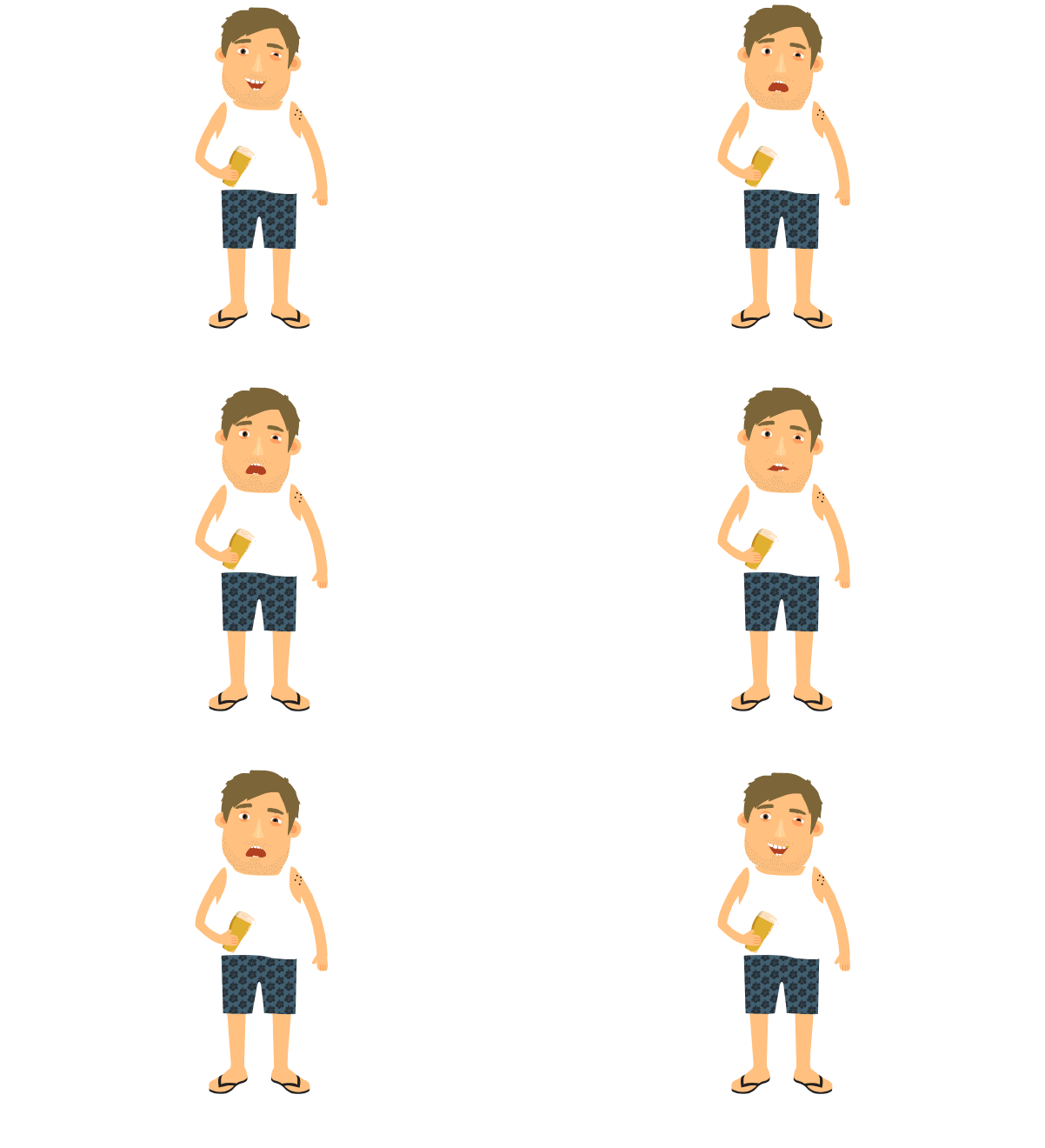
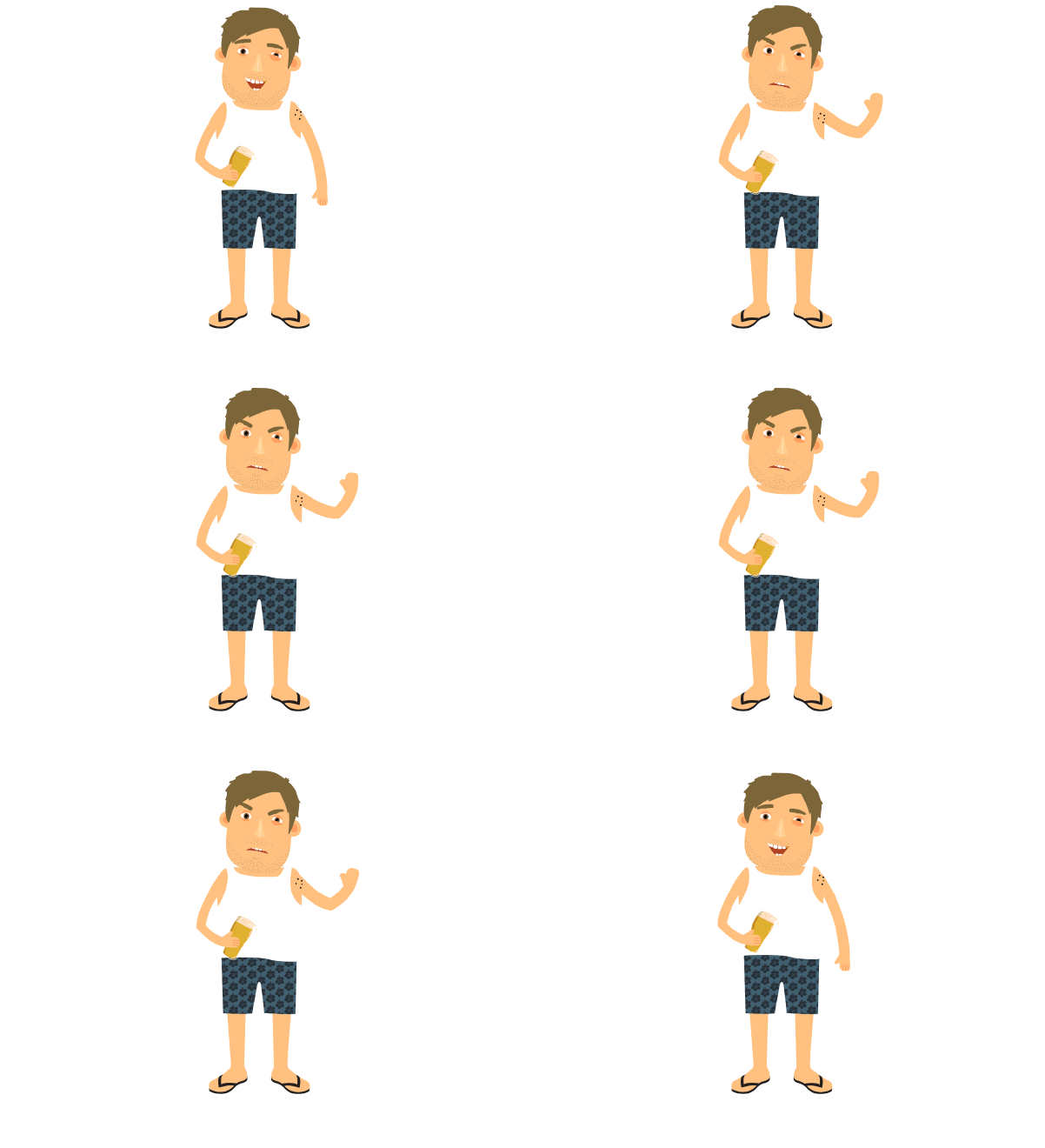
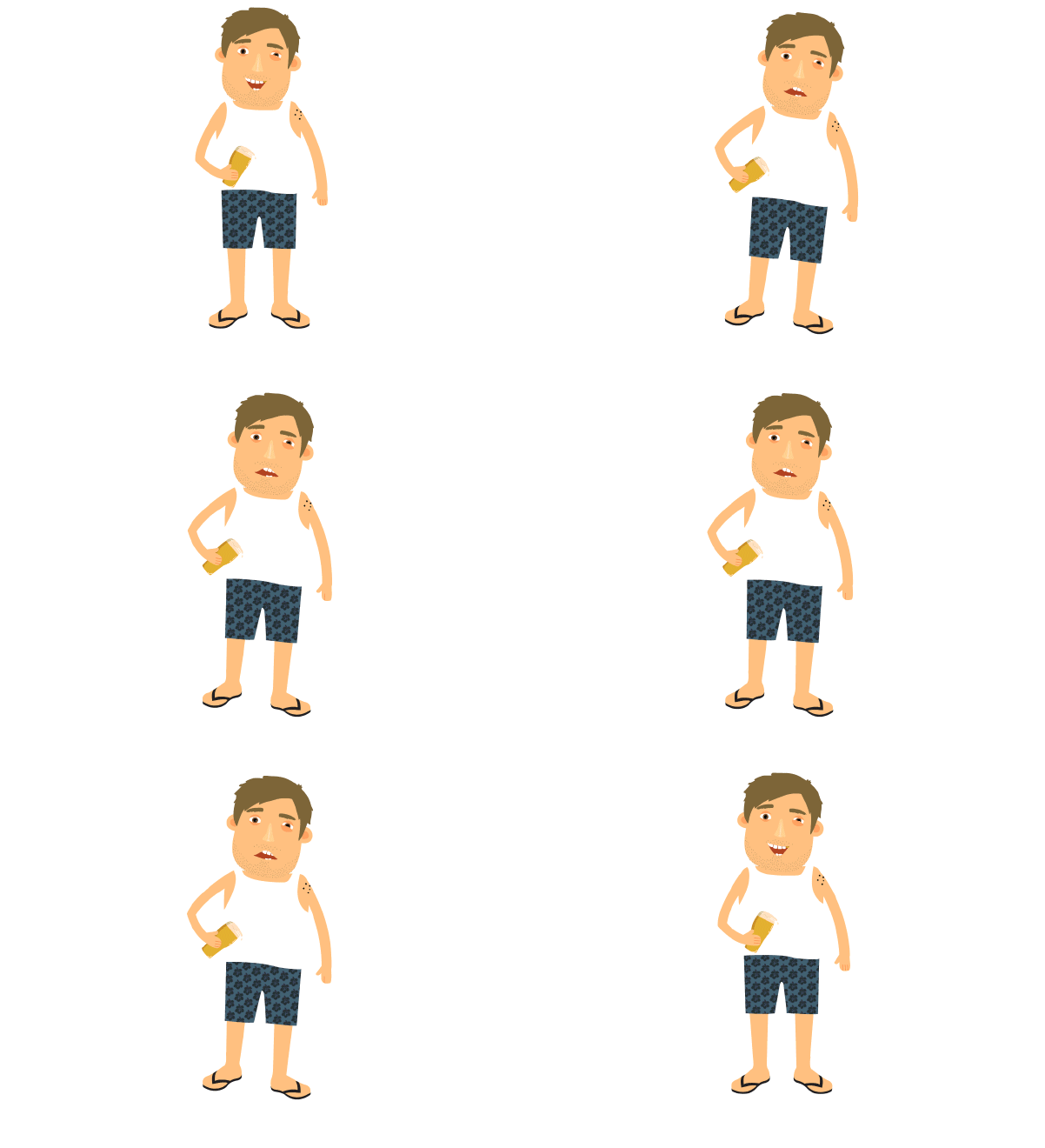
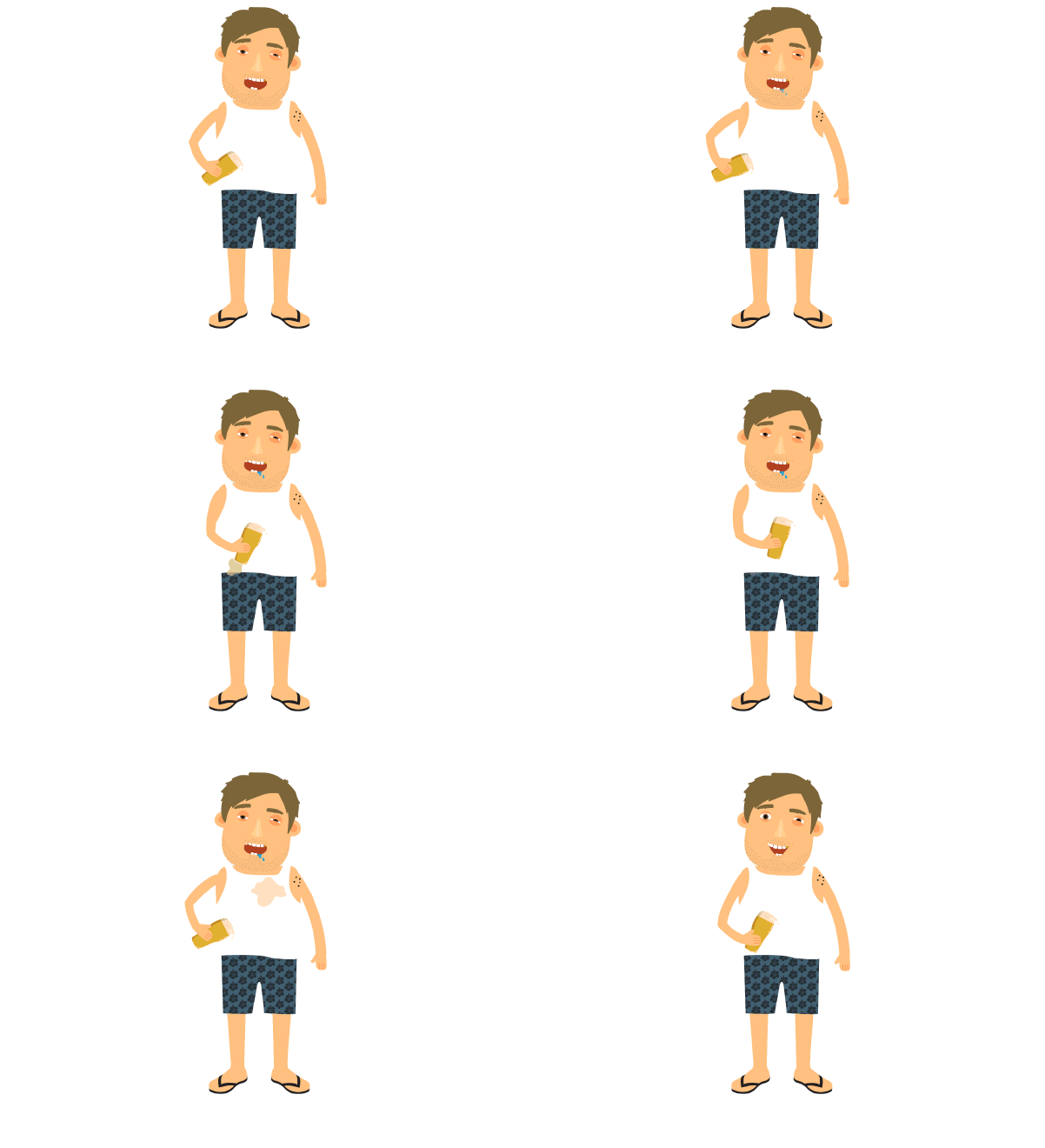
Speech
Incoherent, rambling and slurring.Behaviour
Rude, offensive, overly friendly, annoying, confused, aggressive, violent and inappropriate.Balance
Unsteady on feet, staggering and swaying.Coordination
Spilling drinks, inability to find one's mouth with a glass, drowsiness and difficulty opening and closing doors.You may consider the following indicators when assessing if someone is unduly intoxicated, but this is not a definitive list.
-
- Incoherent or muddled speech
- Loss of train of thought
- Rambling or unintelligible conversation
- Slurring words
-
- Bumping into or knocking over furniture or people
- Falling down or cannot stand
- Difficulty walking straight
- Staggering or stumbling
- Swaying uncontrollably
- Unsteady on feet
-
- Difficulty counting or paying money and fumbling change
- Difficulty opening or closing doors
- Dropping drinks
- Inability to find mouth with a glass
- Spilling drinks
-
- Aggressive
- Annoying/pestering others
- Argumentative
- Bad tempered
- Belligerent
- Confused
- Difficulty paying attention
- Disorderly
- Drowsiness or sleeping at a bar/table
- Exuberant
- Inappropriate sexual advances
- Loss of inhibition
- Loud/boisterous
- Not understanding normal conversation
- Offensive, including the use of offensive language
- Overly friendly
- Physically violent
- Rude
- Vomiting
If you note any of the above indicators in a patron’s conduct, assess if there could be causes other than intoxication. Speaking to a person about the possible causes for their signs of intoxication is important in meeting your obligations under the Liquor Act. It also ensures that you do not unlawfully discriminate against a person with mental or physical impairments.
Your observations of the quantity, rate and type of liquor consumed by a patron on the premises can help inform your assessment of whether that person is unduly intoxicated.
In the situation where you observe a patron has consumed little or no liquor at your venue but they are showing signs of being unduly intoxicated, they may have consumed liquor (or other intoxicating substances) before entering your venue, or you may not have seen their previous consumption at the premises. If they display indicators of undue intoxication and you have spoken to them to ascertain there are no other causes, you still have grounds for reasonable belief that they are unduly intoxicated.
-
[Narrator]
This is Brandon and he's a really nice guy.
He's into poetry, vintage typewriters, upcycling and drinks served in jam jars.
The problem is, Brandon is as full as a doctor's wallet.
[Brandon]
Can I get a half-strength, decaf, soy, espresso martini?
[Barman]
Where are your friends?
[Brandon]
Friends, friends are just superficial elements that flow in and out of your life like water down a creek bed.
[Narrator]
Brandon's a bit tired and emotional and won't be served another jam jar tonight.
Jingle
Whether they're just too cool,
or just a bit of a fool.
They've had too much to drink,
or just causing a stink.
They've no ID and underage,
or skolling a thousand flaming grenades.
It's responsible service that we're aiming for, so it's up to you to follow the law.
Also consider...
- Download our 'Follow the law' posters and LCD images.
- Learn more about RSA training.
- Read about responsible service of gambling (RSG) training.
- Subscribe to the Inside Liquor and Gaming newsletter.
- Contact the Office of Liquor and Gaming Regulation.
Penalties for allowing unduly intoxicated patrons to obtain or consume alcohol
Under the Liquor Act 1992, it is an offence to sell or supply liquor to an unduly intoxicated person. It is also an offence to allow unduly intoxicated persons to consume liquor on licensed premises.
If you observe a customer is buying drinks for an unduly intoxicated friend, advise them it is against the law for them to supply that friend with alcohol. Friends who supply liquor to an unduly intoxicated person can face heavy fines, along with the licensee or staff for allowing it to happen.
The penalties listed below are current as at 1 July. The values change each year on this date.
Penalties for licensed venue staff and employers
| Offence | Penalty |
|---|---|
Supplying alcohol to an unduly intoxicated person | $83,450 for the licensee, permit holder or approved manager $83,450 for any other person |
Allowing the supply of alcohol to an unduly intoxicated person | |
Allowing an unduly intoxicated person to consume alcohol |
Read more about penalties for irresponsible service of alcohol.
Penalties for patrons
Penalties apply for the patron too, so by removing them from the premises you are doing them a favour!
| Offence | Penalty |
|---|---|
Drunk person on licensed premises | $83,450 |
Unduly intoxicated person refusing to leave a licensed premises | $83,450 |
Unduly intoxicated person attempting to enter a licensed premises after being refused entry |
Also consider...
- Download our 'Follow the law' posters and LCD images.
- Learn more about RSA training.
- Read about responsible service of gambling (RSG) training.
- Subscribe to the Inside Liquor and Gaming newsletter.
Preventing patrons from becoming unduly intoxicated
Licensees and staff are responsible for preventing patrons from becoming unduly intoxicated. You must ensure alcohol is served, supplied and promoted in a way that maintains a safe environment in and around your venue, and preserves the amenity of the nearby area.
Refusing service and preventing undue intoxication
You must put systems in place that ensures staff refuse service to, and prevent drinking of alcohol by, persons who are unduly intoxicated.
Refusing service can be difficult - even more so when trying to reason with a person who may be irrational, argumentative or aggressive. It is much easier to prevent a patron from becoming unduly intoxicated than to manage it after the fact.
Monitoring and assessing patrons
Licensees and permit holders are responsible for putting a control system in place to monitor and assess people in, and trying to enter, your premises, for signs of undue intoxication and disorderly conduct. Control systems should cover premises entry, bar serveries and consumption areas.
You are expected to tailor controls to each licensed venue you operate. For example, the less open the layout of the premises, the more roaming staff members may be required to monitor for unduly intoxicated patrons. Lighting, noise levels and physical layout must also be considered.
Training staff to control undue intoxication
You must ensure there are adequate procedures and levels of staff training and instruction, to support the control systems in your venue.
As a licensee or permit holder, you will increase your own risk of being penalised for offences relating to unduly intoxicated and disorderly persons if you fail to properly implement and monitor control systems at your venue.
Strategies to prevent undue intoxication
Following are some common sense strategies that can be easily implemented:
- Stop intoxicated patrons at the front door. Has the patron been drinking? Should the patron be admitted? It is much easier for bar staff if security (or the door person) is able to identify and prevent intoxicated patrons from entering the venue.
- Monitor the drinking environment. Staff, security and management must work together to continually monitor tables, bars, gaming rooms, function rooms and entertainment areas. This means communicating with each other regularly throughout the trading period.
- At functions, ensure the host knows that service will be refused to unduly intoxicated patrons, even if it they're paying an all-inclusive price for the function. The host should be involved in any refusal of service as a matter of courtesy and to assist staff.
- Do not provide multiple drinks tickets. The patron will have an expectation that they will be served.
- Encourage drinkers to return to their seat or table by removing bar stools and setting up additional tables.
- Change the visuals – this can reduce the 'bar' feel and discourage excessive drinking.
- Change the music from continuous background beats to identifiable songs - this allows patrons to acknowledge the passing of time.
- Make water available and have staff offer it regularly to encourage patrons to pace their alcohol consumption.
- Encourage patrons to stop drinking or consume non-alcoholic drinks before they reach the point of undue intoxication.
- Lower the entertainment noise level to allow patrons to talk; this slows down drinking.
- Have bar staff assess patrons each time they are served.
- Ensure that lighting is bright enough and sound levels are low enough to enable staff to properly monitor patrons' intoxication levels throughout the venue.
- Be aware that often a different person will come to the bar for a 'shout'. Observe groups of patrons.
- Check on patrons who have not approached the bar. The unduly intoxicated patron may be the one sitting in the corner, being supplied liquor by mates.
- Use signage to indicate that service will be refused.
This list is by no means exhaustive and licensees and staff should share their own successful strategies for preventing patrons from becoming unduly intoxicated.
Providing drinking water
Making drinking water available to patrons is essential to minimising harm and intoxication. Providing drinking water is the responsibility of every licensee.
Under the Liquor Regulation 2002, it is mandatory for commercial hotel licensees, community club licensees, commercial other (bar) licensees, licensees catering a commercial public event and any licensee who trades after 12 midnight to provide cold drinking water free of charge to any patron who requests it, at any time the premises is trading. All other licensees must make cold drinking water available either free-of-charge or at a reasonable cost to patrons when the premises is trading.
Also consider...
- Download our 'Follow the law' posters and LCD images.
- Learn more about RSA training.
- Read about responsible service of gambling (RSG) training.
- Subscribe to the Inside Liquor and Gaming newsletter.
- Contact the Office of Liquor and Gaming Regulation.
Refusing service to unduly intoxicated patrons
At some point all licensees, permit holders and their employees will have to decide whether to refuse to serve alcohol to a patron, or prevent a patron from drinking alcohol.
Before refusing to supply a person with an alcoholic drink, or stopping a person from drinking, we recommend that your staff member engages in a conversation with the person suspected of being unduly intoxicated.
Speaking to a person helps to identify possible causes for signs of intoxication, which is important in meeting your obligations under the Liquor Act. It also ensures that a patron is not being unlawfully discriminated against (based on mental or physical impairment, for example).
Licensees, as part of their risk-assessed management plan, may have a written policy that deals with 'refusal of service'. This gives staff a clear understanding of their responsibilities and the steps to take when refusing to serve patrons. It is important for staff to deliver a consistent message that all patrons understand.
The following are some suggested 'do's and don'ts' of service refusal.
Do's of service refusal
- Do be polite and avoid value judgements. Use tact – politely inform the patron you will not serve them any more alcohol.
- Do point to posters/signs behind the liquor service point to reinforce your decision.
- Do explain the reason for refusal of service (e.g. showing signs of being unduly intoxicated).
- Do offer (if appropriate) non-alcoholic beverages instead, or to phone a taxi or a friend to drive them home. It is harder to get angry with someone offering to do something for you.
- Do make sure that they leave the premises safely and that they do not hang around outside.
- Do enter incidents relating to refusal of service in a log book, especially those involving threats or aggression.
- Do advise management and other bar staff that the person has been refused service to ensure they are not served liquor by someone else.
Don'ts of service refusal
- Don't call your patron a 'drunk' – warn them politely that their behaviour is unacceptable.
- Don't be persuaded to give them 'one last drink' after you have stated that they have had enough.
- Don't agree to let the person finish their drinks (it is an offence under the Liquor Act to allow a minor or unduly intoxicated or disorderly person to consume liquor on licensed premises).
- Don't raise your voice. If they raise theirs, lower yours.
- Don't put off refusal hoping that the patron will leave after the next drink - act while the patron can still be reasoned with.
- Don't judge other people.
- Don't think the matter is over because you have verbally addressed it.
When an unduly intoxicated patron remains on premises
While licensees are responsible for preventing a patron from becoming unduly intoxicated, it is not an offence against a licensee if an unduly intoxicated person remains on the licensed premises, provided they are closely monitored.
As the licensee is responsible for maintaining a safe environment in and around their venue, they should ensure that an unduly intoxicated patron is closely monitored and carefully managed so that the patron:
- has no further access to alcohol
- does not adversely affect the amenity of the nearby area.
Managing unduly intoxicated patrons on premises
Managers should always support the decision of their staff in refusing service to a patron they believe is unduly intoxicated. Overruling a staff member's decision in one situation increases chances of an unduly intoxicated person being served or drinking alcohol in the future. This can increase the risk of significant penalties for the staff and licensee, permit holder or approved manager.
Managing unduly intoxicated patrons must be done assertively and respectfully. If you identify an unduly intoxicated patron is with a friend, consider engaging with that friend to:
- advise that their friend is not going to be served any more alcoholic drinks
- explain why
- seek their assistance in getting the unduly intoxicated patron home safely.
Licensees are afforded some discretion when dealing with intoxicated patrons. For example, you may be concerned that by evicting an intoxicated patron they may not be capable of getting themselves home safely. In situations like this you may choose to:
- allow the patron to wait for friends to finish their drinks before taking them home
- allow the patron to wait for a spouse or friend to collect them, or for a staff member to finish duty before taking the patron home
- provide them with water, coffee, food and time to sober up before tackling public transport. Caring for a patron after service is refused does not 'balance out' the harm in serving a person to a state of undue intoxication.
Removing unduly intoxicated patrons from the venue
A licensee or permit holders and/or their staff or agent can refuse entry or ask a person to leave if they are unduly intoxicated. If you ask a patron to leave the licensed premises, because they are unduly intoxicated, they must do so immediately. It is an offence for a drunk person to be on a licensed premises.
It is an offence for a patron to fail to leave the premises after being asked to leave, or to enter the premises after being refused entry. In this case, the licensee or permit holders and/or their staff or agent may use necessary and reasonable force to remove the patron.
When OLGR or police identify unduly intoxicated patrons in a licensed venue
If an unduly intoxicated person is found in a venue, police or Office of Liquor and Gaming Regulation (OLGR) investigators will ask:
- why the patron is there
- how they reached their current state
- what action is being taken.
A police officer or OLGR investigator may form the view that the circumstances, and the intoxication level of the patron, may warrant further action.
Also consider...
- Download our 'Follow the law' posters and LCD images.
- Learn more about RSA training.
- Read about responsible service of gambling (RSG) training.
- Subscribe to the Inside Liquor and Gaming newsletter.
- Contact the Office of Liquor and Gaming Regulation.
Responsible service of alcohol marshals
Responsible Service of Alcohol (RSA) marshals assist licensees to ensure patrons at their licensed venue consume alcohol responsibly and are not supplied with liquor if they are unduly intoxicated.
The role of an RSA marshal
RSA marshals are RSA-trained staff members who work with other venue staff, including managers, bar staff, floor staff and crowd controllers to ensure RSA compliance is upheld. They should be easily identifiable to patrons who may approach them if they require assistance.
RSA marshals do not perform the duties of a crowd controller, therefore engaging RSA marshals at your venue does not remove any obligation you have relating to engaging licensed crowd controllers.
The responsibilities of an RSA marshal
RSA marshal responsibilities include:
- actively communicating with licensed crowd controllers, bar staff, floor staff and management to implement the licensee's practices and procedures for dealing with unduly intoxicated or disorderly patrons
- supporting all venue staff in upholding RSA practices
- observing patrons to identify irresponsible drinking behaviours, such as rapidly or excessively consuming alcohol
- encouraging and assisting patrons to monitor or control their consumption of alcohol at the early signs of intoxication, for example by slowing their rate of consumption or consuming non-alcoholic or low alcohol drinks
- monitoring patrons for signs of undue intoxication, including those who may be receiving alcohol from their friends
- ensuring patrons have access to free water and are encouraged to consume water between, or instead of, alcoholic drinks
- providing a visual presence to patrons and support for bar staff and management of the licensed premises.
If you expand the role of an RSA marshal to include responsibilities other than those listed above, it may trigger the requirement for a crowd controller licence under the Security Providers Act 1993.
Also consider...
- Read more on refusing service.
- Refresh your RSA knowledge and try the online quizzes.
- Read the Security Providers Act 1993.
Quiz: Unduly intoxicated patrons and the responsible service of alcohol
Take our quiz to test your knowledge of responsible service of alcohol (RSA).
It's a great refresher if you already have RSA certification and work at a licensed venue.
© The State of Queensland 1995–2026