
Buying a property that has a resource authority
A resource authority (also called a permit, tenement or tenure) allows an individual or company to carry out authorised resource industry activities on private land.
When you buy a property in Queensland, you should find out whether it has any current or proposed resource authorities and legal agreements in place. This is because resource agreements are binding on future landholders; once you own the land, you are legally required to continue any pre-existing arrangements.
Find out more about resource authorities.
This guide does not constitute or replace legal advice about your circumstances. Sellers and buyers should seek independent legal advice about their obligations under Queensland's resources legislation.
This information does not apply to prospecting permits, fossicking licences, quarries or renewable energy.
Find out if a property has a resource authority
Before you buy a property, use our free online search tools to find any resource authorities that overlap the property.
Property reports
Visit Public searches for resource authorities and go to the Resource authorities request form.
You can download a Lot on plan resource authority report to get a summary of granted resource authorities and applications over a property. The report includes maps and details of all resource authorities and applications, including type, status and holder information.
If a resource authority does overlap the property, and if you know the resource authority permit ID (for example, ML1000 or EPG100), you can also download a Resource authority public report. This report includes information such as:
- authorised holder(s) and their representative
- contact information
- lodgement, grant and expiry dates (if applicable).
GeoResGlobe
GeoResGlobe is a free, online, interactive map that allows users to view Queensland's mining and exploration data. The topic Coexisting properties and resource authorities provides interactive information you can use to visualise if there is a resource authority over a property. It also shows access tracks to mining leases and mining claims, which are not shown in the property report above.
-
This topic on GeoResGlobe displays current applications and approved resource authorities in Queensland.
- Open GeoResGlobe topic Coexisting properties and resource authorities.
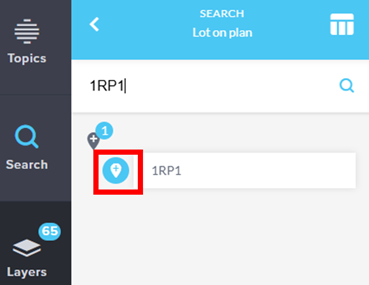
- Click Search, then select either Lot on plan or Street address.
- Enter the required text, then select the search icon.
- When results are displayed, select Add to places icon next to your area of interest. Your area of interest is now shown in Places and highlighted yellow on the map view.
- Select the Toolbar to view tool.

- Select Identify, then Identify point and click on your area of interest on the map.

- The results panel at the bottom of the screen will display the layer/s relevant to your area of interest.
- Select the checkbox next to your area of interest.
- Select Advanced Intersect Report.
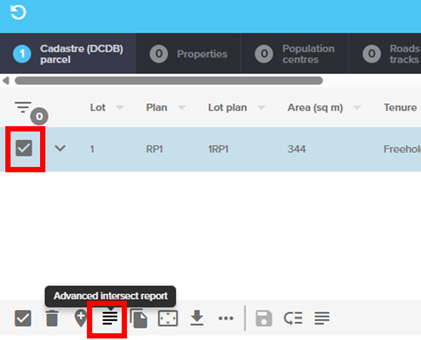
- On the pop-up, select Run Report.
- A spreadsheet will be sent to your downloads folder. The spreadsheet may include information such as:
- Resource authority results on the property.
- Overlap—percentage of parcel covered by the resource authority.
- Within—percentage of the resource authority that is within the parcel.
Find out about legal agreements
If there is a resource authority over the property you are buying, you need to know what agreements are in place between the current property owners and the resource authority holder, and understand their implications for you.
Where to find agreements
Check the seller disclosure statement for the disclosure of resource agreements. You should ask the seller for copies of any Notice of Entry and all current agreements, and seek legal advice on those agreements.
Some agreements are required to be listed on the property's title search. Your conveyancer should give you a copy of the title search as part of their services. Alternatively, you can order a copy yourself from Titles Queensland. View an annotated sample title search document (PDF, 707KB) to see where to find resources dealings.
You can also confirm the existence of resource agreements by contacting the resource authority holder.
-
Generally, all mining leases and mining claims require compensation agreements. If there is a designated access to a mining claim or mining lease that runs across the property, there will be a compensation agreement outlining access terms.
Compensation agreements are binding on future landholders and are not recorded on the land title. Contact the current landholder and the miner to confirm the existence and obtain copies of any compensation agreements.
-
Some agreements will be listed on the land title. These include:
- conduct and compensation agreements
- opt-out agreements.
Other types of agreements will not be listed on the land title. These agreements include:
- deferral agreements
- access agreements
- access to restricted land.
You'll need to seek copies of these agreements from the seller.
Recommendations for property buyers
Legal advice
Before you sign a contract, seek your own legal advice about what clauses should be included.
You should also seek legal advice on any resource agreements before settling on a property.
Buying at auction
If you plan on purchasing a property through auction, it is important to note there may be differences in the clauses for your contract compared to those you would get in a regular sale contract.
Prior to bidding, you should:
- seek your own professional advice regarding the differences in auction contracts
- conduct a free property search to help you determine what resource agreements are possible for any resource authorities over the property
- review the land title to see if there are any agreements listed
- review the seller's disclosure statement for reference to any resource agreements.
Compensation
Payments can be given in a lump sum at the start of an agreement or as annual payments.
For mining leases and mining claims, compensation for mining and access is negotiated and decided at the application or renewal stage. If compensation was given as a lump sum when the agreement commenced, as a new property owner, you may not receive this compensation. However, your purchase negotiations may be able to include an adjustment for any lump sum compensation already paid.
Seek professional advice from a lawyer, valuer and tax specialist regarding compensation.
For more information, read A guide to landholder compensation for mining claims and mining leases (PDF).
Land access
A resource authority holder has the right to access the property to carry out authorised resource activities. Before you buy a property, understand what land access provisions apply and check the terms of existing resource agreements.
You may wish to contact the resource authority holder to talk about your plans and how you can work together if you are successful in purchasing the property. Notify the resource authority holder of the change in ownership to ensure you are reissued Notices of Entry that apply to the property.
Learn more about landholder land access rights and resource authority holder land access rights and responsibilities. You can also read A guide to land access in Queensland (PDF).
Succession planning
If you are purchasing a property with the plan to maintain it within your family, or you are purchasing or inheriting property from a family member, you should consider any resource agreements in your succession planning. Resource agreements are binding on successors. This means that if you pass the property onto a family member, they inherit the responsibilities and obligations within those agreements.
Renegotiating agreements
Resource agreements are binding on future landholders. If you purchase a property that has an existing agreement in place, you will become a party to that agreement and take on its terms and conditions. You may wish to renegotiate the agreement, which you may do by following the steps below.
Note: If written consent has been given for a resource authority holder to conduct activities within restricted land, this consent cannot be withdrawn. This condition may be in an existing compensation agreement.
-
- Check the term of the compensation agreement; it may run for the term of the resource authority, or the term of the resource authority and any renewal.
- If the agreement covers the current term only, a new compensation agreement will be required to be negotiated when the resource authority is eligible for renewal.
- If there is a material change in circumstances, the parties may in good faith jointly agree to amend the compensation agreement to account for the change. A material change in circumstances for mining leases and mining claims is when the mining lease or mining claim experiences a significant material change that impacts the compensatable effects in the existing agreement.
-
- Review the existing conduct and compensation agreements or opt-out agreements to check for renegotiation pathways.
- If there is a material change in circumstances, the parties may in good faith jointly agree to amend the conduct and compensation agreements to account for the change. A material change in circumstances is when the landholder or resource authority holder experiences a significant change that impacts the compensatable effects in the existing agreement.
- Read A guide to land access in Queensland (PDF) for further explanation.
Buyer checklist
The following checklist will help you do due diligence for a property you are interested in buying. However, you must also seek independent legal and financial advice before proceeding with a purchase.
Contact us
Contact the Mining Community Infoline for information and assistance. You can also read the following resources for more information: