
Hive registration and branding
Help slow the spread
Varroa mite (Varroa destructor) is now classified as category 2 restricted matter. It remains notifiable and all beekeepers must report, control or contain the pest.
Varroa destructor with resistance to synthetic miticide treatments (including synthetic pyrethroids Bayvarol and Apistan and synthetic formamidine Amitraz, Apivar and Apitraz) has been detected in South East Queensland.
Help slow the spread of varroa mite in Queensland:
- Limit the movement of hives, swarms and nucs to reduce risks of spread.
- Avoid bringing swarms into your apiaries until they have been treated and a negative wash has been undertaken.
- Monitor your hives every month and before, during and after treatments to ensure effectiveness.
- Maintain hive health using an integrated pest management plan.
- Do not always use the same miticide—rotate different chemicals. Always follow the instructions on the chemical’s label or permit.
- Report hive checks using the Bee 123 form.
- Come clean go clean, especially between apiaries.
- Use the varroa mite surveillance map to inform your decision.
Registration
- You must register as a biosecurity entity with Biosecurity Queensland if you keep 1 or more European honey bee hives.
- Native beehives do not need to be registered.
- Livestock and beehives have different registration requirements, so you will need separate registrations if you keep both.
- Individuals, groups or businesses may register depending on who owns the hives.
- If you downsize your hive numbers or cease beekeeping temporarily or permanently, please update your biosecurity entity registration with the actual number of hives in your operation.
Biosecurity entity registration portal
Find out how to:
Help with the portal
- Read the biosecurity entity registration portal user guide.
- Contact Biosecurity Queensland online, by phone or in person.
Hive identification numbers (HIN)
Each registrable biosecurity entity is allocated a HIN. The HIN replaces the old apiary brand. Only 1 HIN is allocated for each biosecurity entity, which is assigned to all hives owned.
Branding hives
You are required to brand at least 1 out of every 50 hives with your HIN, but we recommend marking all your hives as proof of ownership and to help with recovery in the event of loss or theft. This is particularly important if your hives have old brands.
You must ensure the HIN stays legible.
You must brand the hive with your HIN:
- on the front of the hive
- in block letters, at least 25mm high.
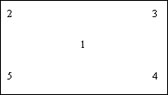
The first HIN on a hive must be placed in the centre of the front of the hive (position 1).
If a hive is already branded, you must place any subsequent brands of the HIN in the corners of the front of the hive in a clockwise sequence, starting from the top left corner (position 2).
Hive placement
It is prohibited to establish:
- an apiary site with more than 40 hives within less than 0.8km from an established apiary with more than 40 hives on the site
- any apiary site (regardless of the number of hives) within less than 2km from a queen bee breeding apiary.
Under the Biosecurity Regulation 2016, you must be aware of and adhere to these minimum distances between hives.
Distance between hives supports commercial beekeepers and allows them to work their hives without robbing.
The extra distance for queen bee breeding apiaries provides additional assurance in maintaining the purity of queen bee lines.